Avenue Decor
Bamboo fiber panels create a calm, continuous look, but visible joints can interrupt that effect. A thin dark line may catch the eye across an otherwise smooth wall. Dust can also collect along uneven edges, making routine cleaning less convenient. That is why seam planning matters as much as choosing a panel color or texture. A neat finish can make a small room feel more unified. It can also help decorative grooves and surface patterns flow from one panel to the next.
How to install bamboo fiber panels without visible seams? The answer depends on the panel system, wall condition, and manufacturer’s instructions. Start with a flat, dry surface, then check panel dimensions and lay out the full wall before fixing anything. A level, fine-tooth saw, measuring tape, and compatible adhesive or fastening system are practical essentials. Leave any expansion allowance specified by the product maker; forcing panels tightly together may cause buckling. Cut edges should be clean and test-fitted, especially around corners, outlets, and door frames. Small misalignments are surprisingly noticeable. And they happen. Even careful work may leave a joint visible under strong side lighting, so inspect the wall from several angles as you go. This guide explains why seamless-looking installation is worth planning, what preparation helps, and which finishing details deserve extra attention. Product requirements differ, so the panel manufacturer’s guidance should always take priority over generic advice.
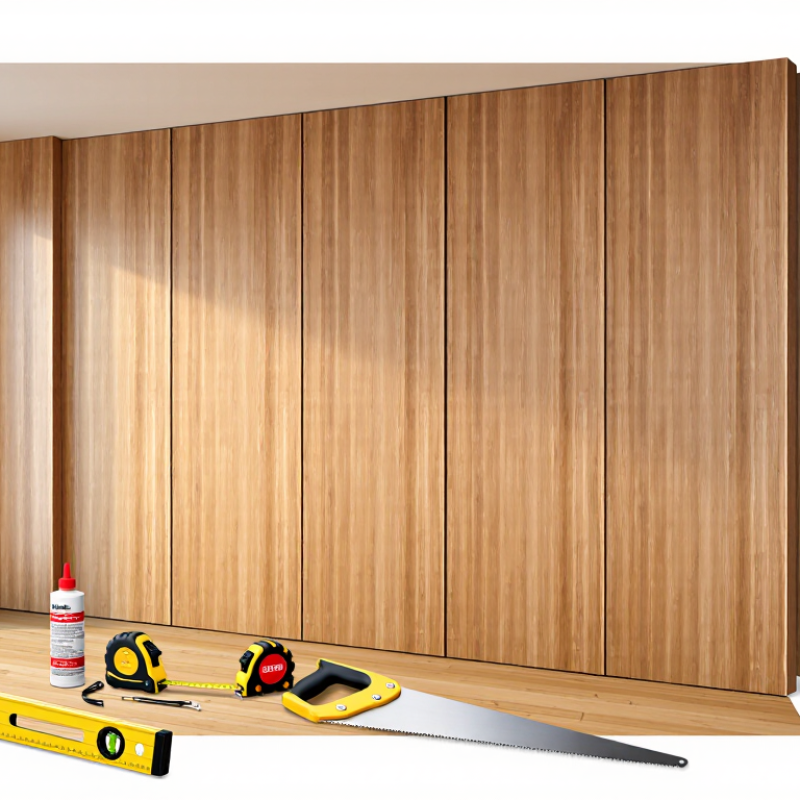
Bamboo fiber panels are typically made from processed bamboo fibers mixed with binding agents, though their core and surface can vary. That construction gives panels a consistent finish, but it does not make every wall perfectly flat. A seamless appearance depends on careful measuring, stable backing, and clean, square cuts. Even a small error can create a thin shadow line across a bright wall.
Dry-fit the panels before applying adhesive, and check alignment near corners, outlets, and window trim. Use a level and a fine-tooth cutting blade to reduce chipped edges. Follow the panel maker’s instructions for adhesive, joint spacing, and room conditions; materials may expand slightly with changes in temperature or moisture.
Keep the substrate clean and dry. Small gaps matter. A neat joint also makes dust less likely to collect in grooves and keeps the wall’s pattern visually continuous.
Still, a perfectly invisible seam is not always realistic, especially on uneven surfaces. I would rather allow for a straight, consistent joint than force panels together and risk buckling later.
Concealed joints can make bamboo fiber panels read as one calm surface. Instead of drawing the eye to repeated gaps, the wall lets its texture carry across the room. That matters in a narrow hallway, where daylight often catches every line. The effect is quiet.
Achieving it starts before the first panel goes up. Installers need a flat, dry substrate, consistent measurements, and panels allowed to acclimate to the room’s conditions. Edges must meet cleanly, but they should not be forced together to hide a poor cut. Concealed joint profiles or carefully planned edge details can reduce visible breaks while keeping the surface aligned.
Small details matter. A slight shift near a doorway can repeat across the wall and become obvious under grazing light.
Concealment does not mean ignoring movement. Temperature and humidity changes may affect materials, so installation should follow the panel maker’s technical guidance and allow any required perimeter clearance. Check the wall from several angles before finishing; side lighting can reveal uneven joints that look invisible head-on.
Even with careful work, a seam may show a little. That is worth admitting. Continuity comes from accurate planning, not from pretending every wall is perfectly uniform.
Seamless bamboo fiber paneling gives a wall a calmer, more continuous appearance. Without dark gaps or repeated joints, the eye follows the grain across the room. This can make a narrow hallway feel less busy, especially when panels are aligned carefully. Small details matter. Keep corners straight, outlet cutouts neat, and edges level under side lighting; uneven joints can stand out in afternoon sun. Color and texture may vary between panels, so inspect them together before installation. Not quite invisible.
Fewer visible seams can reduce places where dust collects, although no wall finish is maintenance-free. A soft cloth and mild cleaner are generally gentler than abrasive pads; follow the care instructions for your specific panels. Room conditions matter, too. Bamboo-based materials may respond to humidity, while a damp or uneven surface can affect adhesion and alignment. Allow the acclimation time and clearances specified for the product, and use a flat, sound substrate. Seamless does not mean forgiving: a small measurement error can carry across an entire wall. That trade-off deserves attention before the first panel goes up.
| Dimension | Panels with Visible Seams | Panels with Concealed or Minimized Seams | Practical Consideration |
|---|---|---|---|
| Visual continuity | Joint lines divide the wall into distinct sections and may form a noticeable grid. | A more continuous surface can make the wall feel calmer and less visually interrupted. | Panel color, pattern, surface texture, lighting, and alignment also affect how continuous the finished wall looks. |
| Perceived room scale | Frequent joint lines can draw attention to individual panel widths. | Fewer visible divisions may help a wall appear more expansive, especially when panels are aligned consistently. | This is a visual effect rather than a change to the room’s actual dimensions. |
| Cleaning | Exposed joints may collect dust and can require attention during routine cleaning. | Fewer exposed joint lines can make the visible surface simpler to wipe and maintain. | Use cleaning methods approved for the specific panel finish; concealed joints are not necessarily sealed or waterproof. |
| Installation alignment | Joint positions are visible, so uneven spacing or misalignment may be easier to notice. | Concealed joint systems can reduce the visual prominence of connections when panels are installed accurately. | A level substrate, careful layout, and correct fitting remain important for both installation styles. |
| Movement and clearances | Some systems use visible joints or trims as part of the intended layout. | Joints can be hidden behind profiles or interlocking edges, while movement allowances remain part of the installation. | “Seamless” generally describes the finished appearance; follow the panel maker’s instructions for expansion gaps and perimeter details. |
| Repairs and replacement | An individual panel may be easier to identify and access, depending on how it is fixed. | A highly continuous finish may require more care to replace a panel without affecting adjacent sections or matching the surface. | Keep spare panels from the same production batch when possible, since color and finish can vary between batches. |
| Material use and cost | Standard layouts may be straightforward to plan, though trims and joint profiles may be required. | Concealed-joint detailing may need additional planning, specialized profiles, or more precise cutting. | Actual material use and cost depend on panel size, room geometry, substrate condition, and the selected fixing system. |
| Suitable applications | Useful when a defined panel pattern is part of the desired design. | Often chosen for feature walls, reception areas, and interiors where a visually uninterrupted finish is preferred. | For wet or humid locations, confirm that the specific panel system is approved for the conditions and install it as directed. |
Planning note: Bamboo fiber panels and joining systems vary. Check the product’s installation guide for substrate requirements, fixing methods, joint treatment, cleaning, and suitability for the intended room.
Reducing visible seams starts before the first panel goes up. Check that the wall is clean, dry, and reasonably flat; bumps can push panel edges apart. Let the panels acclimate in the room for the period specified by the manufacturer. Then measure the wall and mark a straight reference line. A small layout error can repeat across the whole surface.
Dry-fit the panels before applying adhesive or installing fasteners. Check each edge under the room’s actual lighting, since side light can reveal gaps that look invisible head-on. Cut with a fine-tooth blade, support the panel fully, and test the fit before trimming again. Keep joints aligned and apply even pressure across each panel. Follow the panel instructions for adhesive, fixing points, and any required expansion gap; forcing edges tightly together may cause problems later.
Take your time at corners and around outlets. A precise template often gives a cleaner cut than measuring each side separately. Wipe away excess adhesive promptly, but use only a cleaning method approved for the panel surface. Even careful work can leave a hairline seam. That is worth acknowledging: wall movement, uneven framing, or changing room conditions may affect the result, and a perfectly seamless finish is not always realistic.
Installation methods for reducing visible seams
In a straight run, each additional panel creates one more internal joint: the seam count equals the number of panels minus one. Using larger panels where practical can reduce the number of joints. Careful alignment, a flat substrate, and the panel maker’s specified joint detail can also help make seams less noticeable.
Counts assume one straight run with no openings or end joints; they are calculated from the number of panels, not from installation test results.
Seamless bamboo panels are easier to keep clean because dust has fewer joints to collect in. Use a soft microfiber cloth and a pH-neutral cleaner. Dry the surface after wiping. Avoid scouring pads, excess water, and steam unless the panel maker confirms they are suitable. Small details matter. Check corners and edges every few months for lifting, swelling, or finish wear. A seamless look does not make a wall waterproof. In kitchens, bathrooms, and busy corridors, confirm the panel’s moisture and impact ratings before installation. One point is easy to overlook: even careful cleaning cannot correct poor edge sealing or a damp substrate.
These panels suit interior feature walls, ceilings, reception areas, and retail displays, where broad surfaces create a calmer visual line. For public spaces, keep spare panels from the same production batch; color and texture can vary between batches. FAO’s Global Forest Resources Assessment 2020 reports about 35 million hectares of bamboo forest worldwide, roughly 50% more than in 1990. That figure describes bamboo resources, not the environmental performance of any particular panel. Ask suppliers for material composition, finish details, and cleaning guidance. The practical compromise is real: fewer visible seams may simplify routine wiping, but repairs can be harder to disguise when a large panel is damaged.
They usually combine processed bamboo fibers with binding agents. Core and surface details can vary.
Dry-fit each panel before using adhesive. Check corners, outlets, and window trim with a level. Small gaps matter.
Not always. Uneven walls, changing light, and slight color differences can reveal joints. I would choose straight seams over forcing panels together.
Keep the backing flat, sound, clean, and dry. Follow the panel instructions for adhesive, spacing, room conditions, and acclimation.
Use a fine-tooth blade and measure carefully. Test the fit around an outlet before cutting the next panel.
Wipe with a soft microfiber cloth and a suitable mild cleaner. Dry the surface afterward. Avoid excess water and abrasive pads.
Possibly, but check their moisture and impact ratings first. A seamless look does not make a wall waterproof.
They can suit feature walls, ceilings, reception areas, and retail displays. Keep spare panels from the same batch; matching later may be difficult.
Check corners and edges every few months for lifting, swelling, or finish wear. Cleaning cannot fix a damp backing or poor edge sealing.
Bamboo fiber panels can transform walls into a clean, coordinated surface, but poorly aligned edges may interrupt the overall look. Seamless installation uses carefully planned layouts and concealed joints to make adjoining panels appear continuous. This approach can create a calmer, more spacious feel while also reducing the visual distraction of gaps. It is especially useful in rooms where a consistent finish matters, from living areas to offices and other interior spaces.
How to install bamboo fiber panels without visible seams? Start with a flat, prepared surface, measure and plan the panel layout, and align each piece precisely. Use suitable joining methods and installation materials to conceal connections, following the panel specifications and allowing for any required expansion space. Careful cutting and consistent spacing help prevent uneven lines. After installation, routine cleaning and prompt attention to surface wear can keep the panels looking neat and unified over time.