 Avenue Decor
Avenue Decor
Avenue Decor
When considering insulation options for home construction, it becomes essential to understand the thermal properties of various materials. Among these, Oriented Strand Board (OSB) is commonly used. Homeowners and builders often ask, "What is the R-value of OSB boards for home insulation?" R-value serves as a measure of thermal resistance, influencing energy efficiency and comfort levels in a home.
Recent industry reports indicate that OSB typically has an R-value ranging between 1.4 to 1.8 per inch. This places it between traditional plywood and other standard insulation materials, such as fiberglass. While OSB provides some insulation, it is crucial to recognize its limitations. Many professionals recommend using OSB in conjunction with other insulating materials to achieve optimal performance. The effectiveness of insulation is only realized when materials are used appropriately and in conjunction with proper installation techniques.
Building codes and energy efficiency standards increasingly emphasize the importance of understanding insulation values. As consumers strive for energy-efficient homes, discerning the R-value of OSB boards becomes vital. Awareness of these insulation properties can prevent costly mistakes and promote sustainable choices. However, homeowners must also reflect on local climate conditions, energy needs, and overall building design when evaluating insulation options.
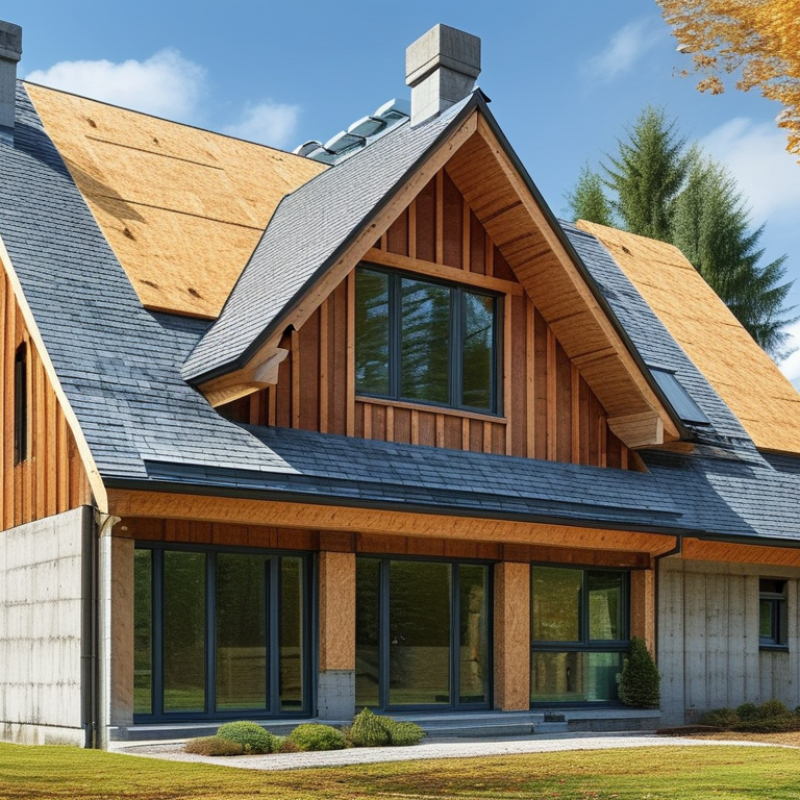
Understanding R-value is essential for effective home insulation. R-value measures a material's thermal resistance. It indicates how well the material insulates against heat flow. Higher R-values correlate with better insulation performance. This is particularly important in climates with extreme temperatures.
OSB (Oriented Strand Board) typically has an R-value ranging from 1.4 to 1.5 per inch. This can vary based on thickness and density. A report from the Department of Energy states that optimal insulation can reduce heating and cooling expenses by up to 30%. This statistic underscores the importance of selecting the right materials for energy efficiency.
However, many homeowners overlook R-value when choosing OSB boards. They may focus on cost or availability instead. This lack of awareness could lead to higher energy bills in the long term. It's crucial to understand that while OSB is a viable option, its R-value might not be as effective as other insulation materials. Balancing cost and thermal performance is a challenge that requires careful consideration.
| OSB Board Thickness (inches) | R-value | Application | Comments |
|---|---|---|---|
| 0.5 | 1.1 | Wall Sheathing | Basic insulation value |
| 0.75 | 1.4 | Flooring | Suitable for light floors |
| 1.0 | 1.9 | Roofing | Good for roofing applications |
| 1.5 | 2.7 | Exterior Walls | Better insulation for homes |
| 2.0 | 4.0 | High-Performance Walls | Optimal for energy efficiency |
: R-value measures a material's thermal resistance. It indicates how well it insulates against heat flow.
Higher R-values mean better insulation performance. This is crucial in extreme temperature climates.
OSB stands for Oriented Strand Board. It is a construction material made from wood strands and adhesives.
OSB provides a barrier against external elements. This contributes to a home’s energy efficiency.
R-value can be measured using heat flow meters or lab testing. DIY methods are also possible but may lack accuracy.
R-value can vary based on the thickness and density of OSB. Manufacturer specifications also play a role.
Homeowners often focus on cost or availability instead of thermal performance. This can lead to higher energy bills.
No, not all OSB has the same properties. Research is vital to ensure adequate thermal resistance.
Balancing cost and thermal performance is challenging. Careful consideration of options is necessary.
Local climate and regulations impact insulation needs. It’s essential to ensure compatibility with insulation goals.
The R-value of insulation materials is crucial for assessing their thermal resistance and effectiveness in home insulation, making it essential for homeowners to understand this metric. OSB (Oriented Strand Board) plays a significant role in home construction, providing structural support while also contributing to insulation. Factors influencing the R-value of OSB boards include their thickness, density, and manufacturing process, which can vary significantly.
To answer the question, "What is the R-value of OSB boards for home insulation?" one must consider that OSB typically has a lower R-value compared to other insulation materials, such as fiberglass or foam. Various methods can be employed to measure the R-value of OSB, including laboratory testing and mathematical calculations based on materials' characteristics. By comparing OSB's R-value to other insulation options, homeowners can make informed decisions about their insulation choices for optimal energy efficiency.
